



Influence Research of Urbanization on Spatial and Temporal Distribution of Lightning Parameters
-
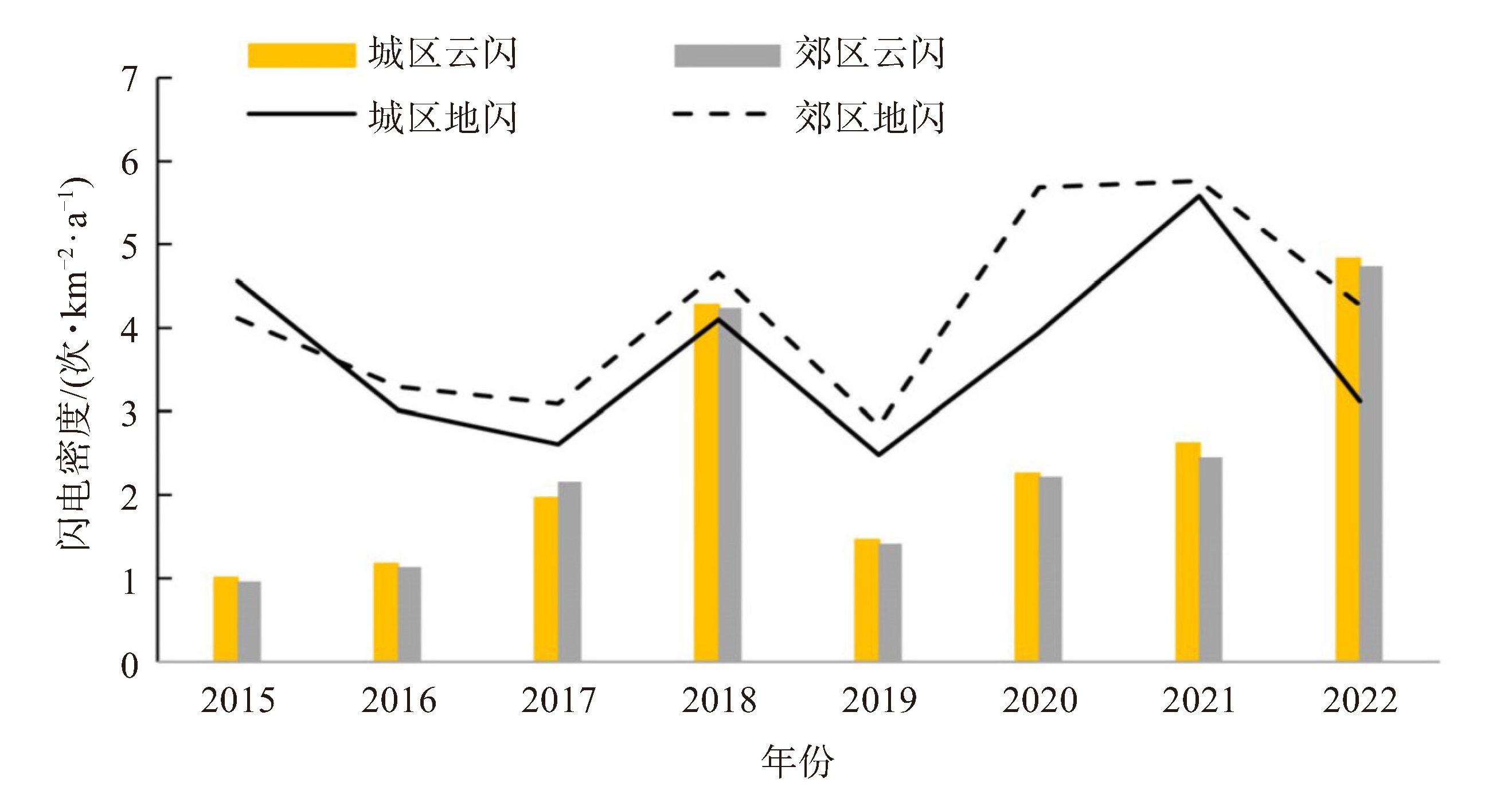
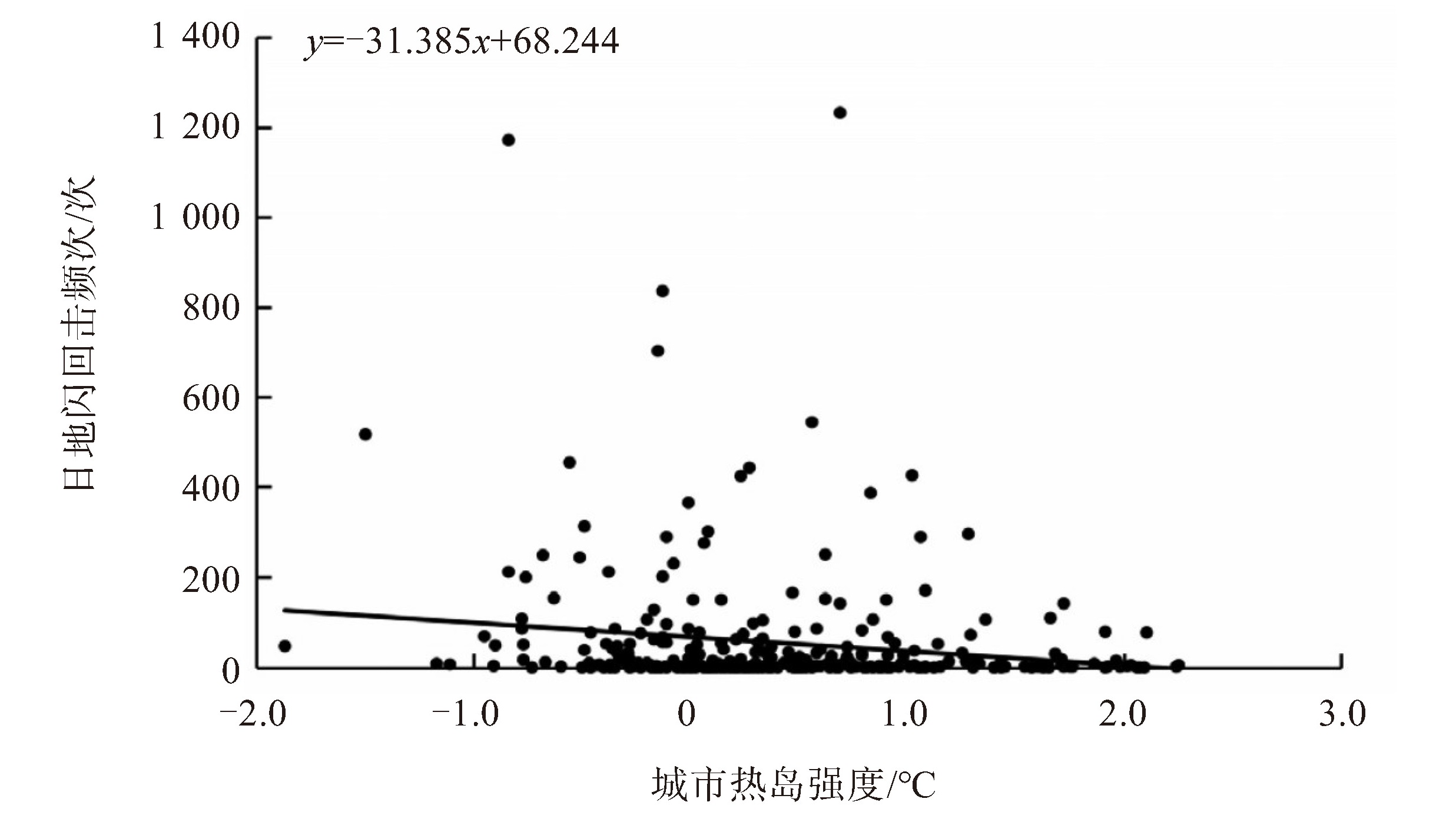
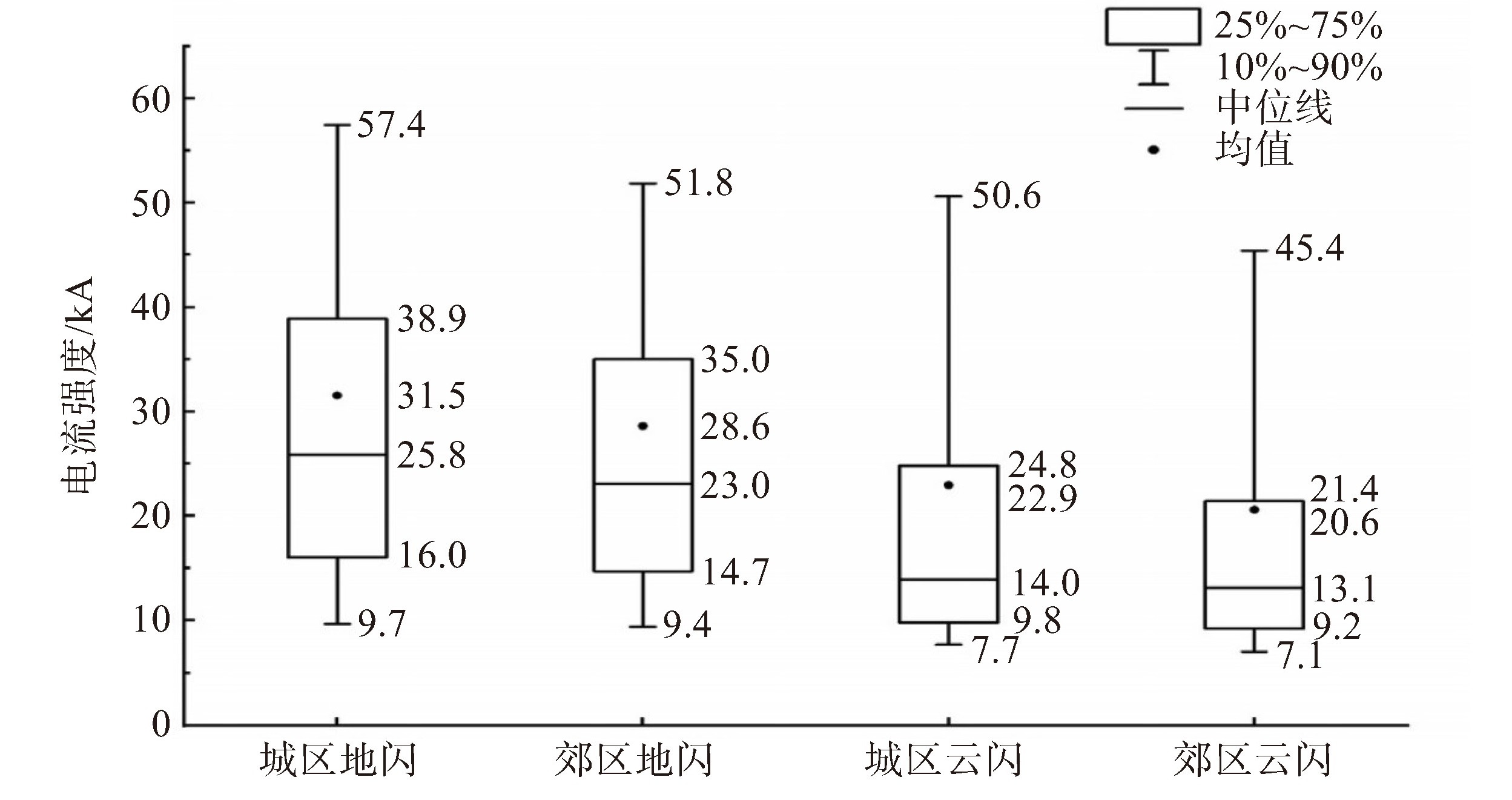
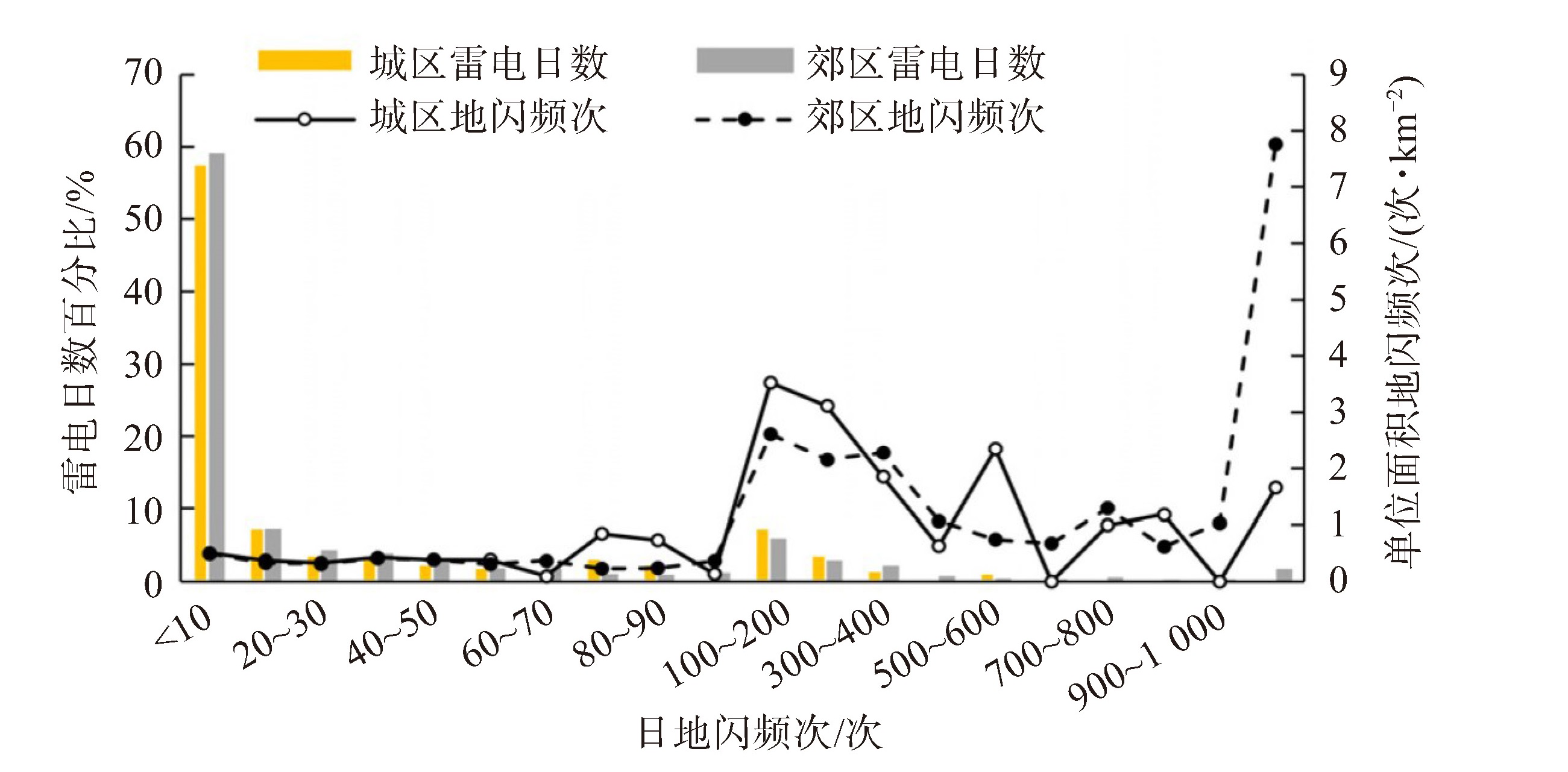
摘要: 开展城区与郊区雷电参数时空分布特征及其差异研究,对深入认识自然环境改变对雷电活动规律产生的影响以及提高城市雷电灾害防御能力具有重要的现实意义。根据湖北省VLF/LF(Very Low Frequency/Low Frequency)三维闪电定位系统2015年1月—2022年12月的监测资料,采用DBSCAN(density-based spatial clustering of applications with noise)算法开展了雷暴团的识别;在此基础上,采用数理统计方法,对城区与郊区的闪电频次、极性、电流强度、雷暴团等参数时空分布特征进行了对比研究。结果表明:城区云闪比高于郊区,城区与郊区近8年的闪电密度呈增加趋势,电流强度、雷电日均呈减少趋势,地闪参数受城市化效应的影响更加显著。郊区地闪密度明显高于城区,比城区高14.7%,城区云闪与地闪平均电流强度均大于郊区,地闪活动能够产生更大的电流强度。郊区发生小幅值地闪(I ≤20 kA)的概率比城区大6.6%,发生雷电绕击的概率大于城区;城区发生大幅值地闪(I > 100 kA)的概率比郊区大0.5%,发生雷电反击的概率大于郊区。城区与郊区雷电活动均以小雷暴为主,平均雷暴团面积分别为77.2 km2、81.7 km2,小雷暴发生概率城区比郊区高,大雷暴发生概率郊区比城区高。Abstract: Investigating the spatiotemporal distribution and urban-suburban differences of lightning parameters is of great practical significance for understanding how the natural environment influences lightning activity and for improving urban lightning disaster prevention. Based on the monitoring data from the VLF /LF 3D lightning location system in Hubei Province (2015-2022), the DBSCAN algorithm was used to identify thunderstorm clusters. On this basis, mathematical and statistical methods are adopted for a comparative study on the distribution characteristics of lightning frequency, polarity, current intensity, and thunderstorm cloud cluster between urban and suburban areas. The results show a higher proportion of cloud lightning in urban areas, and an increasing trend for lightning density both in urban and suburban areas over the past 8 years, while lightning current intensity and average thunderstorm days decreased. The cloud-to-ground (CG) lightning parameters are more significantly affected by urbanization. Specifically, CG lightning density in suburban areas is 14.7% higher than that in urban areas. The average current intensity for both cloud and ground lightning in urban areas is higher than that in suburban areas, which means the CG lightning activity can produce higher lightning current intensity. The probability of current amplitude for CG lightning, which is less than 20 kA, is 6.6% higher in suburban areas when compared to the urban areas, and the shielding failure rate is also higher. Conversely, the probability of a current amplitude exceeding 100 kA is larger than 100 kA, is 0.5% higher in urban areas, and its back flashover rate is also higher. Both areas are dominated by small thunderstorm cloud, with average thunderstorm cluster areas of 77.2 km2 and 81.7 km2, respectively. The occurrence probability for small thunderstorms is higher in urban areas, while the probability of large thunderstorms is higher in suburban areas.
-
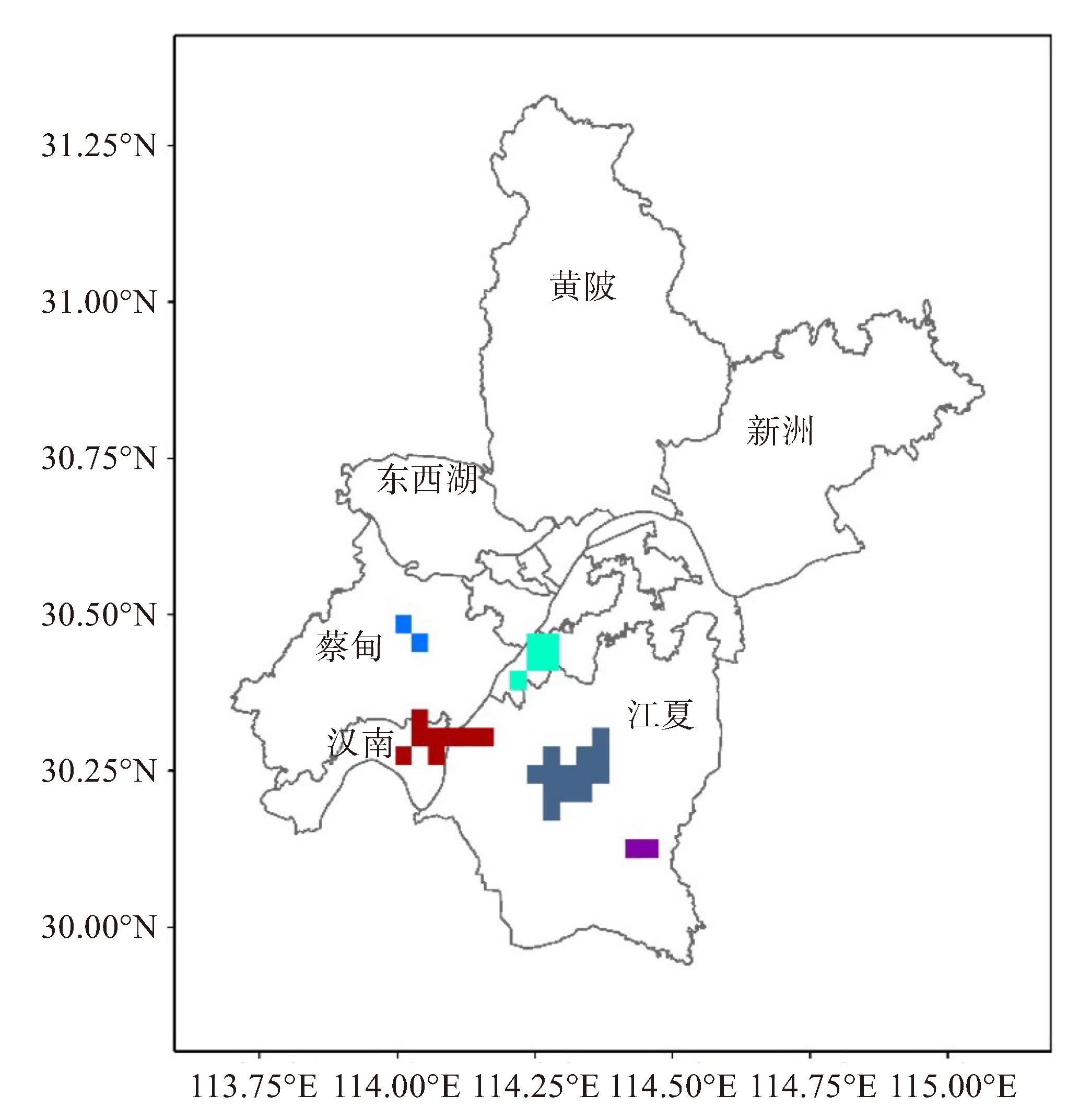
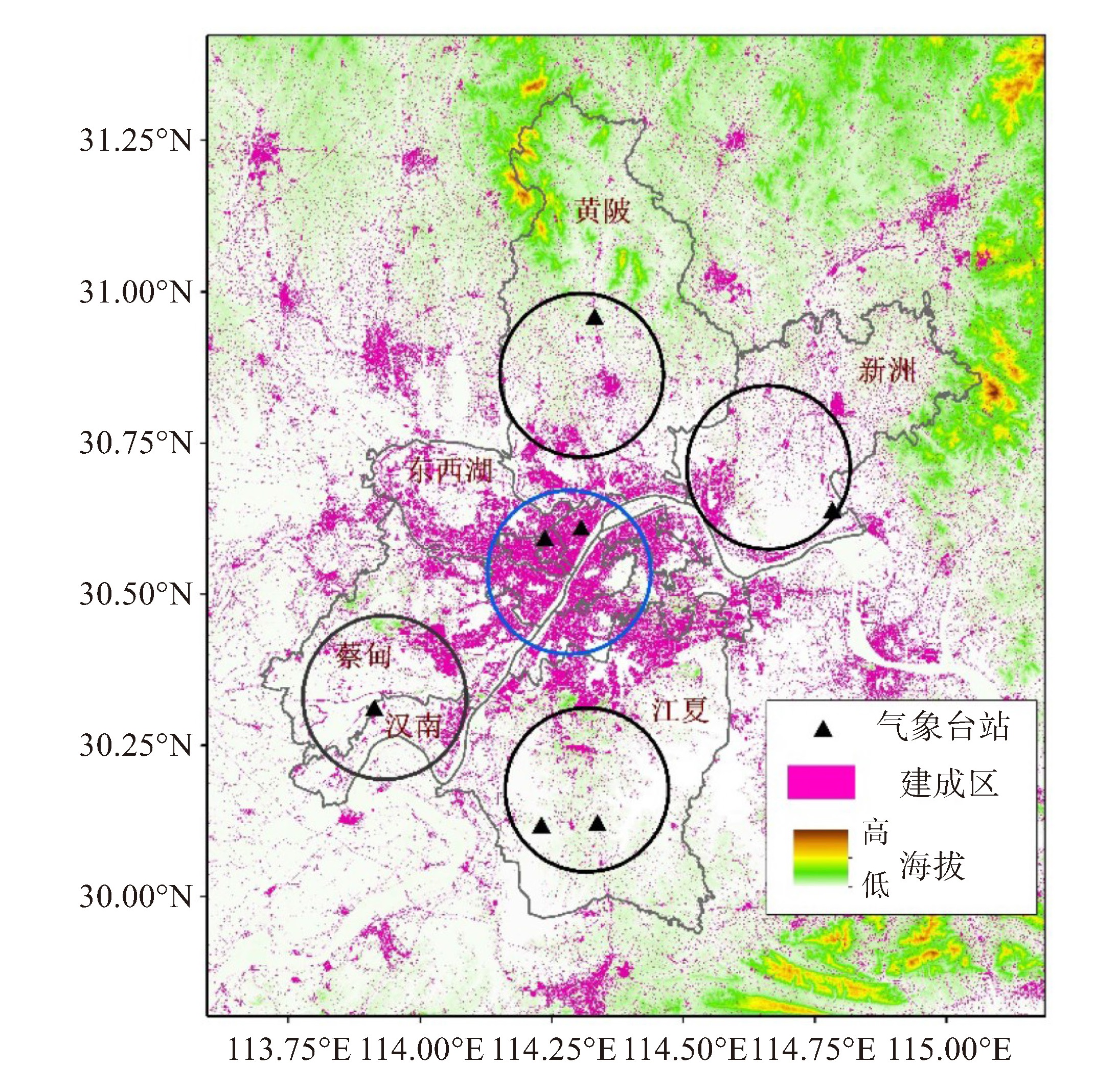
表 1 统计区域内城区和郊区的基本信息
类型 圆心位置 统计半径/km 圆点经度/°E 圆点纬度/°N 建成区占比/% 水域占比/% 林地占比/% 草地占比/% 耕地占比/% 其他占比/% 城区 主城区 15 114.29 30.57 53.6 22.4 12.7 8.2 2.7 0.4 新洲 15 114.67 30.74 13.8 31.2 8.7 13.6 31.7 1.0 黄陂 15 114.31 30.90 15.1 10.2 11.7 13.9 49.0 0.1 郊区 蔡甸 15 113.93 30.36 15.3 24.4 9.1 12.2 39.0 0.0 江夏 15 114.32 30.21 8.3 27.8 11.5 4.1 48.3 0.0 均值 / / / 13.1 23.4 10.2 11.0 42.0 0.3  下载: 导出CSV
表 2 城区与郊区雷电参数的变化趋势(L)及趋势系数(R)
区域 类型 闪电密度/(次·km-2·a-1) 正闪比例/% 电流强度/kA 雷电日/d L R L R L R L R 城区 云闪 0.33 0.570 4 2.39 0.636 2 -2.47 0.760 2* -2.73 0.603 2 地闪 0.06 0.142 0 1.63 0.701 8 -0.25 0.099 0 -1.95 0.612 0 郊区 云闪 0.36 0.636 2 2.85 0.704 3 -2.28 0.913 3* -3.16 0.763 8* 地闪 0.23 0.505 1 0.97 0.516 3 -0.02 0.014 0 -2.86 0.752 7* 注:*表示趋势系数通过0.05显著性水平检验。
下载: 导出CSV
表 3 2015—2022年城区与郊区闪电频次分布
区域 类型 频次/次 正闪比例/% 密度/(次·km-2·a-1) 城区 云闪 13 846 35.8 2.45 地闪 20 774 20.1 3.68 郊区 云闪 54 537 36.3 2.41 地闪 95 265 19.8 4.22
下载: 导出CSV
表 4 2015—2022年不同电流强度分布概率(%)
区域 I ≤20 kA I > 100 kA 总地闪 正地闪 负地闪 总地闪 正地闪 负地闪 城区 34.5 66.6 26.5 2.1 3.6 1.7 郊区 41.1 66.2 34.9 1.6 3.0 1.2 差值 -6.6 0.4 -8.4 0.5 0.6 0.5
下载: 导出CSV
-
[1] 郄秀书, 张其林, 袁铁, 等. 雷电物理学[M]. 北京: 科学出版社, 2013: 1-100. [2] 付茂金, 阮小飞, 王州龙, 等. 高速铁路通信信号综合防雷技术[M]. 北京: 科学出版社, 2014: 1-8. [3] 郑栋, 张文娟, 姚雯, 等. 雷暴闪电活动特征研究进展[J]. 热带气象学报, 2021, 37(3): 289-297. [4] 余蓉, 张小玲, 杜牧云, 等. 华中地区不同地形下的雷暴地闪特征分析[J]. 热带气象学报, 2021, 37(3): 329-340. [5] 张义军, 孟青, 马明, 等. 闪电探测技术发展和资料应用[J]. 应用气象学报, 2006, 17(5): 611-620. [6] 中华人民共和国住房和城乡建设部, 中华人民共和国国家质量监督检验检疫总局. 建筑物防雷设计规范(GB 50057-2010)[S]. 北京: 中国计划出版社, 2011: 1-120. [7] 刘刚, 唐军, 孙雷雷, 等. 不同地形地貌的雷电流幅值概率分布对输电线路雷击跳闸的影响[J]. 高电压技术, 2013, 39(1): 17-23. [8] WESTCOTT N E. Summertime cloud-to-ground lightning activity around major midwestern urban areas[J]. J Appl Meteor, 1995, 34(7): 1 633-1 642. [9] ORVILLE R E, HUFFINES G, NIELSEN-GAMMON J, et al. Enhancement of cloud-to-ground lightning over Houston, Texas[J]. Geophys Res Lett, 2001, 28(13): 2 597-2 600. [10] STEIGER S M. Cloud-to-ground lightning characteristics over Houston, Texas: 1989-2000[J]. J Geophys Res, 2002, 107(D11): ACL 2-1-ACL 2-12. [11] STALLINS J A, BENTLEY M L, ROSE L S. Cloud-to-ground flash patterns for Atlanta, Georgia (USA) from 1992 to 2003[J]. Clim Res, 2006, 30(2): 99-112. [12] ASHLEY W S, BENTLEY M L, STALLINS J A. Urban-induced thunderstorm modification in the Southeast United States[J]. Clim Change, 2011, 113(2): 481-498. [13] 钱嘉星, 徐海明, 万齐林. 珠江三角洲城市群对雷暴的影响[J]. 热带气象学报, 2010, 26(1): 40-48. [14] LIU Y, CHAN L Y, LIN Q, et al. Physical and observable characteristics of cloud-to-ground lightning over the Pearl River Delta region of South China[J]. J Geophys Res: Atmos, 2014, 119(10): 5 986-5 999. [15] 彭琳, 谭涌波, 巴桑卓玛, 等. 南京地区闪电活动对气溶胶浓度变化的响应[J]. 电瓷避雷器, 2016, 274(6): 133-139. [16] SHI T, YANG Y, ZHENG Z, et al. Potential urban barrier effect to alter patterns of cloud-to-ground lightning in Beijing metropolis[J]. Geophys Res Lett, 2022, 49(21): e2022GL100081. [17] 张祎, 边学文, 王康挺, 等. 基于TRMM/LIS资料的浙江省及周边地区闪电特征和气象要素分析[J]. 热带气象学报, 2021, 37(4): 602-610. [18] 张羽, 朱学超. 广东省雷暴特征及其对城市热岛的响应[J]. 生态学杂志, 2017, 36 (12): 3 584-3 593. [19] 朱传林, 李国梁, 张弛儿, 等. 湖北省三维闪电定位系统定位误差仿真分析[J]. 暴雨灾害, 2017, 36(1): 91-96. [20] 孟晓阳, 王佳权, 马启明, 等. 2020年基于VLF/LF三维闪电定位系统的全国闪电数据集[J/OL]. 中国科学数据, 2022, 7(1). (2022-02-09). [21] 张朝忙, 刘庆生, 刘高焕, 等. SRTM 3与ASTER GDEM数据处理与应用进展[J]. 地理与地理信息科学, 2012, 28(5): 29-34. [22] 王学良, 余田野, 朱传林, 等. 我国中部五省雷暴日时空分布特征[J]. 热带地理, 2013, 33(1): 13-20. [23] CHENG S, WANG J, CAI L, et al. Characterising the dynamic movement of thunderstorms using very low-and low-frequency (VLF/LF) total lightning data over the Pearl River Delta region[J]. Atmos Chem Phys, 2022, 22(15): 10 045-10 059. [24] HUANG Y, FAN Y, CAI L, et al. A new thunderstorm identification algorithm based on total lightning activity[J]. Earth Space Sci, 2022, 9 (4): e2021E-e2079E. [25] 陈绍东, 陈绿文, 杜塞, 等. 广东省中部地区雷暴团特征的初步分析[J]. 广东气象, 2021, 43(5): 28-31. [26] 余田野, 贺姗, 张科杰, 等. 基于改进层次分析法的湖北省雷电灾害风险区划[J]. 暴雨灾害, 2023, 42(1): 88-96. [27] 中国气象局. 地面气象观测规范[S]. 北京: 气象出版社, 2011: 5-97. [28] 郭润霞, 王迎春, 张文龙, 等. 基于VLF/LF三维闪电监测定位系统的北京闪电特征分析[J]. 热带气象学报, 2018, 34(3): 393-400. [29] 成勤, 张科杰, 刘俊, 等. 一次特大暴雨过程三维和二维系统闪电特征对比分析[J]. 热带气象学报, 2021, 37(3): 396-408. [30] 耿雪莹, 张其林, 刘明远. 地面建筑物(群)对雷暴云大气电场影响的模拟研究[J]. 气象科技, 2012, 40(5): 827-833. -



 点击查看大图
图(8) / 表(4)
计量
- 文章访问数: 10
- HTML全文浏览量: 13
- PDF下载量: 2
- 被引次数: 0
 粤公网安备 4401069904700003号