



Long-term Wind Prediction at Airports Based on Deep Learning
-
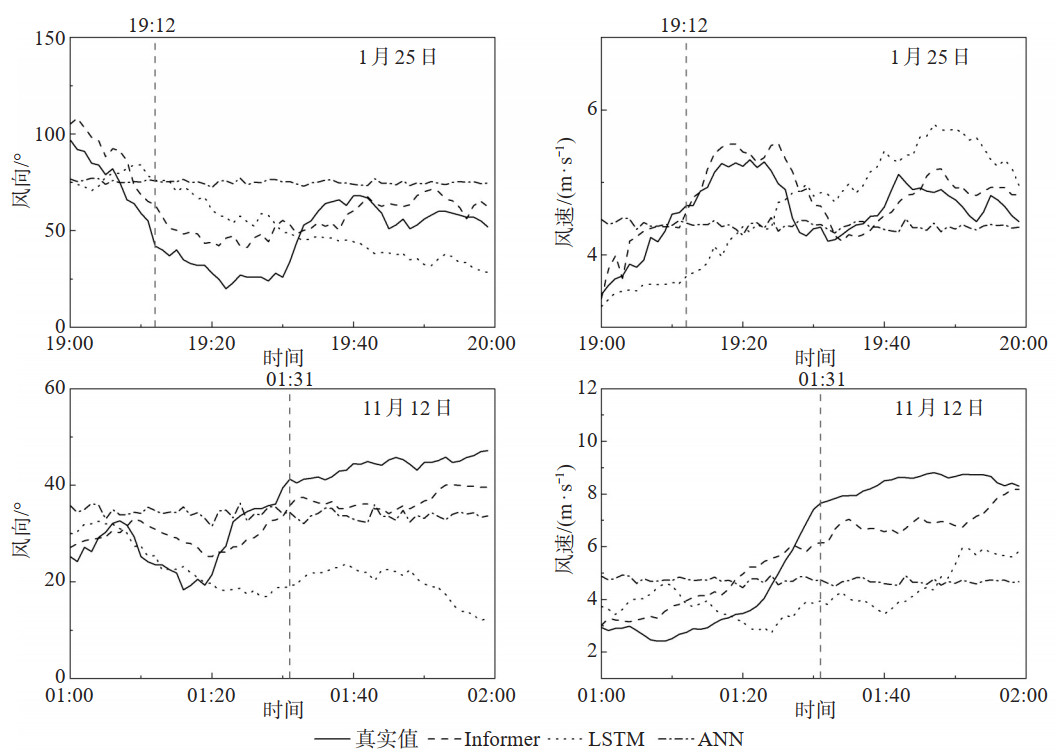
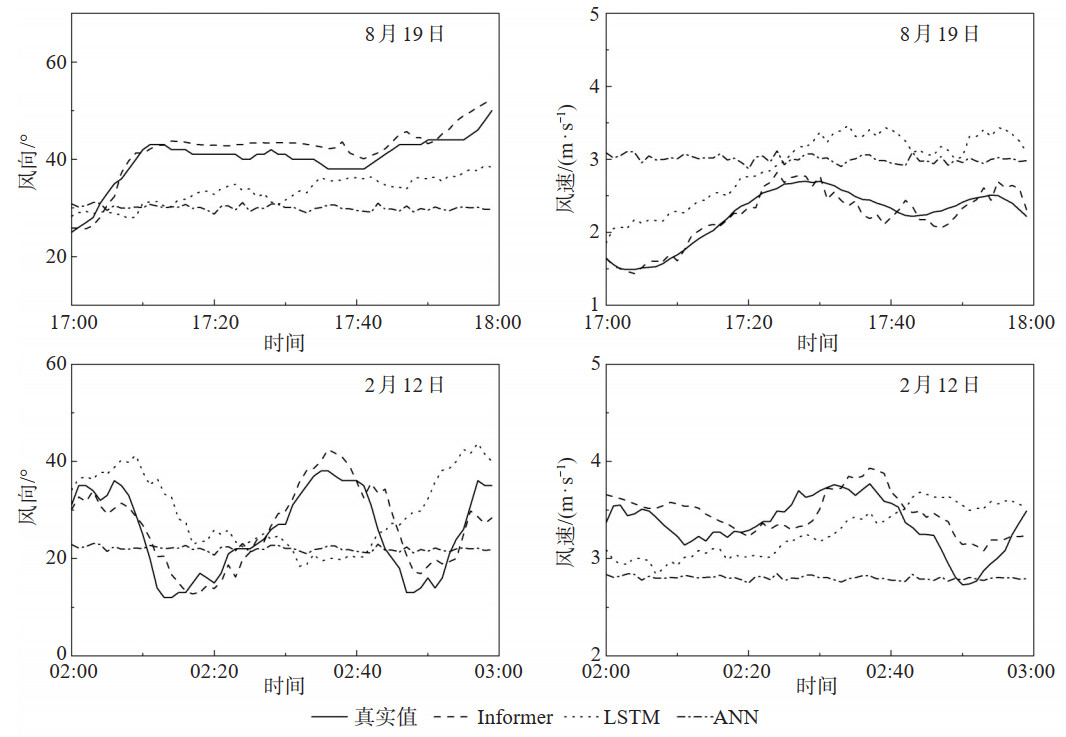
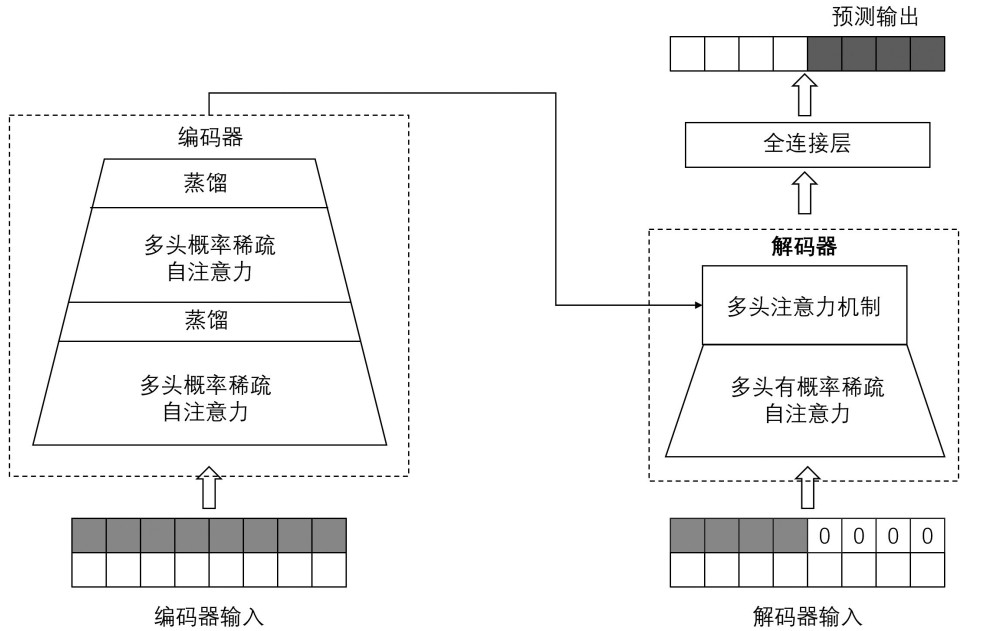
摘要: 针对传统风场预测方法中存在的精度不足和时效性差等问题,引入了Informer模型,提高了对福建省厦门高崎国际机场长时间序列气象数据的预测准确度。相较于传统模型,Informer模型在处理风场时间序列数据中的概率稀疏自注意力机制和自注意力蒸馏技术,能够高效捕捉数据中的长期依赖关系和复杂特征。在60 min预测以及季节性变化中,Informer模型表现出了强大的稳健性和高效性。此外,还对比了不同风场变化对模型预测的影响,发现Informer模型在不同风场条件下均能更好地保持稳定预测性能,进一步验证了其广泛适用性和鲁棒性。通过提高预测精度和时效性,本研究不仅为航空气象服务提供了更精准的风速和风向预测,有助于保障航空器飞行安全、优化航班调度及提升能源利用效率,同时还为短期天气预报等领域带来了积极影响,提供了新的研究思路和解决方案,对于推动深度学习在气象预测中的应用具有重要意义。
-
关键词:
- 深度学习 /
- 风场预测 /
- 长时间序列 /
- Informer模型 /
- 航空气象
Abstract: To address the issues of insufficient accuracy and poor timeliness in traditional wind field prediction methods, this study introduced the Informer model to enhance the forecast accuracy of the longterm meteorological data at Xiamen Gaoqi International Airport. The paper details the unique advantages of the Informer model in handling wind field time series data, including its probabilistic sparse selfattention mechanism and self-attention distillation technology. These features enable the model to efficiently capture long-term dependencies and complex characteristics within the data. Compared with traditional Artificial Neural Networks (ANNs) and Long Short-Term Memory (LSTM) models, the Informer model demonstrates higher prediction accuracy across different time scales. In the 60-minute predictions and seasonal variations, the Informer model demonstrated high robustness and efficiency. Additionally, a comparison of the effects of different wind field variations on the model's wind field predictions revealed that the Informer model consistently maintained stable predictive performance under varying wind field conditions, further validating its broad applicability and robustness. By enhancing prediction accuracy and timeliness, this research not only provides more accurate wind speed and direction forecasts for aviation meteorological services, aiding in flight safety, optimizing flight scheduling, and improving energy efficiency, but also has a positive impact on short-term weather forecasting and offers new research ideas and solutions. It has significant implications for advancing the application of deep learning in meteorological forecasting.-
Key words:
- deep learning /
- wind field prediction /
- long-term sequences /
- Informer model /
- aviation meteorology
-
表 1 Informer模型参数设置
超参数 超参数值 超参数 超参数值 训练轮数 200 批处理大小 100 编码器层数 2 解码器层数 1 学习率 0.000 1 注意力头数 8 注意力机制 prob 解码器堆叠 3,2,1 激活函数 Gelu 丢弃率 0.05 采样因子数 5 全连接层神经元个数 2048  下载: 导出CSV
表 2 三种模型对风场不同预测长度的评价指标对比
风场 模型方法评价指标 ANN LSTM Informer MAE RMSE MAE RMSE MAE RMSE 风速 10 min 0.208 4 0.221 8 0.076 8 0.091 2 0.020 9 0.022 4 30 min 0.181 0 0.196 3 0.106 6 0.117 1 0.037 0 0.042 4 60 min 0.173 1 0.182 6 0.152 9 0.179 7 0.053 1 0.096 1 风向 10 min 25.7° 39.3° 1.2° 2.8° 0.8° 1.4° 30 min 21.7° 31.4° 4.3° 10.5° 3.1° 5.3° 60 min 19.3° 28.0° 13.6° 21.4° 9.4° 14.2°
下载: 导出CSV
表 3 三种模型对风场不同季节的评价指标对比
风场 模型方法评价指标 ANN LSTM Informer MAE RMSE MAE RMSE MAE RMSE 风速 春季 0.152 9 0.187 3 0.085 6 0.102 8 0.053 7 0.064 0 夏季 0.173 5 0.194 8 0.098 2 0.115 3 0.061 9 0.072 4 秋季 0.145 2 0.168 6 0.079 4 0.093 5 0.049 6 0.058 7 冬季 0.165 7 0.192 4 0.103 5 0.121 6 0.067 1 0.079 8 风向 春季 21.5° 31.8° 14.8° 22.6° 8.2° 11.1° 夏季 23.2° 28.2° 19.2° 25.3° 13.5° 17.8° 秋季 18.3° 21.1° 10.4° 18.5° 7.6° 9.5° 冬季 20.1° 24.7° 13.5° 19.3° 10.8° 15.2°
下载: 导出CSV
表 4 三种模型在两种风场中的预测准确率(%)
风场 模型 ANN LSTM Informer 风速 常规场 48.7 79.2 97.4 突变场 39.1 62.1 88.3 风向 常规场 43.2 75.2 90.2 突变场 30.2 53.4 75.7
下载: 导出CSV
-
[1] 刘政, 张开. 大连机场风特征分析及签派放行应用[J]. 民航学报, 2023, 7(5): 80-84. [2] 李瑶婷, 王钦. 广汉机场2018~2022年春季地面风的特征分析[J]. 民航学报, 2022, 6(6): 94-97. [3] 王钦, 潘微多, 李瑶婷, 等. 地面突风对通航飞行器的影响及数值模拟研究[J]. 科学技术与工程, 2023, 23(20): 8 552-8 559. [4] 房云龙, 赵京华, 秦婷, 等. 上海虹桥机场风向日变化特征分析[J]. 科技创新与应用, 2021(1): 65-68, 72. [5] 肖志宇, 郭炜峻, 房云龙, 等. 厦门机场地面风向年变化及日变化特征分析[J]. 科技视界, 2020(34): 78-81. [6] 胡凯文, 郭秀凤, 罗忠红, 等. 厦门高崎机场2017—2020年地面风突变特征分析[J]. 海峡科学, 2021, 6(174): 19-23. [7] 刘洁莉, 刘冬辉, 韩登云, 等. BP人工神经网络法在大同市日极大风速预报中的应用[J]. 内蒙古气象, 2019(2): 34-38. [8] 张博, 赵滨. 一种集成风向风速的风场空间检验方法[J]. 应用气象学报, 2019, 30(2): 154-163. [9] Lynch P. The origins of computer weather prediction and climate modeling[J]. Journal of Computational Physics, 2008, 227(7): 3 431- 3 444. [10] 李泽椿, 陈德辉. 国家气象中心集合数值预报业务系统的发展及应用[J]. 应用气象学报, 2002, 13(1): 1-15. [11] 沈学顺, 苏勇, 胡江林, 等. GRAPES_GFS全球中期预报系统的研发和业务化[J]. 应用气象学报, 2017, 28(1): 1-10. [12] 贺雅楠, 髙嵩, 薛峰, 等. 基于MICAPS4的智能网格预报平台设计与实现[J]. 应用气象学报, 2018, 29(1): 13-24. [13] 李泽椿, 毕宝贵, 金荣花, 等. 近10年中国现代天气预报的发展与应用[J]. 气象学报, 2014, 72(6): 1 069-1 078. [14] 李颖, 陈怀亮. 机器学习技术在现代农业气象中的应用[J]. 应用气象学报, 2020, 31(3): 257-266. [15] 张烨方, 冯真祯, 刘冰. 基于卷积神经网络的雷电临近预警模型[J]. 气象, 2021, 47(3): 373-380. [16] 周康辉, 郑永光, 韩雷, 等. 机器学习在强对流监测预报中的应用进展[J]. 气象, 2021, 47(3): 274-289. [17] 黄骄文, 蔡荣辉, 姚蓉, 等. 深度学习网络在降水相态判识和预报中的应用[J]. 气象, 2021, 47(3): 317-326. [18] 金子琪, 王新敏, 鲍艳松, 等. 基于卷积神经网络的飑线识别算法[J]. 应用气象学报, 2021, 32(5): 580-591. [19] Filik Ü B, Filik T. Wind speed prediction using artificial neural networks based on multiple local measurements in Eskisehir[J]. Energy Procedia, 2017, 107: 264-269. [20] Hu Q, Zhang R, Zhou Y. Transfer learning for short-term wind speed prediction with deep neural networks[J]. Renewable Energy, 2016, 85: 83-95. [21] Liu H, Mi X, Li Y. Smart deep learning based wind speed prediction model using wavelet packet decomposition, convolutional neural network and convolutional long short term memory network[J]. Energy Conversion and Management, 2018, 166: 120-131. [22] 孙健, 曹卓, 李恒, 等. 人工智能技术在数值天气预报中的应用[J]. 应用气象学报, 2021, 32(1): 1-11. [23] 陈金富, 朱乔木, 石东源, 等. 利用时空相关性的多位置多步风速预测模型[J]. 中国电机工程学报, 2019(7): 2 093-2 106. [24] 梁超, 刘永前, 周家慷, 等. 基于卷积循环神经网络的风电场内多点位风速预测方法[J]. 电网技术, 2021, 45(2): 534-542. [25] Zhou H, Zhang S, Peng J, et al. Informer: Beyond efficient transformer for long sequence time-series forecasting[C]//Proceedings of the AAAI conference on artificial intelligence. 2021, 35(12): 11 106-11 115. [26] Vaswani A, Shazeer N, Parmar N, et al. Attention is all you need[J]. Advances in Neural Information Processing Systems, 2017, 30: 5 998- 6 008. [27] Greene S, Taylor D, Mcelarney Y R, et al. An evaluation of catchment-scale phosphorus mitigation using load apportionment modelling[J]. Science of the Total Environment, 2011, 409(11): 2 211-2 221. [28] Hochreiter S, Schmidhuber J. Long short-tern memory[J]. Neural Computation, 1997, 9(8): 1 735-1 780. [29] 米前川, 高西宁, 李玥, 等. 深度学习方法在干旱预测中的应用[J]. 应用气象学报, 2022, 33(1): 104-114. [30] 赵滨, 刘斌. 基于Stacking的地面PM2.5浓度估算[J]. 环境工程, 2020, 38(2): 153-159. [31] 谢舜, 孙效功, 张苏平, 等. 基于SVD与机器学习的华南降水预报订正方法[J]. 应用气象学报, 2022, 33(3): 293-304. [32] Spiliotis E. Time Series Forecasting with Statistical, Machine Learning, and Deep Learning Methods: Past, Present, and Future[J]. Forecasting with Artificial Intelligence: Theory and Applications. Cham: Springer Nature Switzerland, 2023: 49-75. [33] Davies B M, Thomson D J. Comparisons of some parameterizations of wind direction variability with observations[J]. Atmospheric Environment, 1999, 33(29): 4 909-4 917. [34] Mahrt L. Surface wind direction variability[J]. J Appl Meteorol Climatal, 2011, 50(1): 144-152. [35] Saxe A M, Mcclelland J L, Ganguli S. Exact solutions to the nonlinear dynamics of learning in deep linear neural networks[J]. Computer Science, 2014. DOI: 10.48550/arXiv.1312.6120. [36] Qi D, Majda A J. Using machine learning to predict extreme events in complex systems[J]. Proceedings of the National Academy of Sciences, 2020, 117(1): 52-59. [37] Lazer D, Kennedy R, King G, et al. The parable of Google Flu: traps in big data analysis[J]. Science, 2014, 343(6 176): 1 203-1 205. [38] Lapuschkin S, WäLdchen S, Binder A, et al. Unmasking Clever Hans predictors and assessing what machines really learn[J]. Nature Communications, 2019, 10(1): 1096. -

 点击查看大图
图(3) / 表(4)
计量
- 文章访问数: 1
- HTML全文浏览量: 0
- PDF下载量: 0
- 被引次数: 0
 粤公网安备 4401069904700003号