



Wind Characteristics of Typhoon Chaba in Marine Near-ground Boundary Layer
-
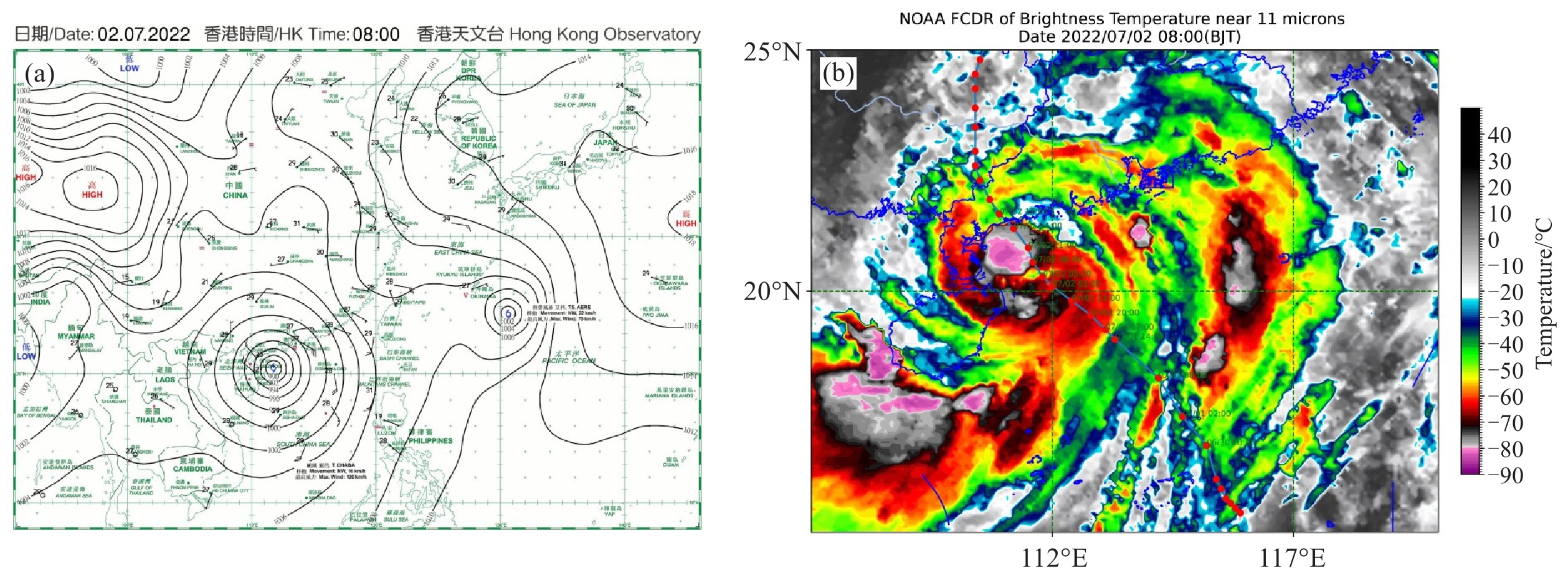
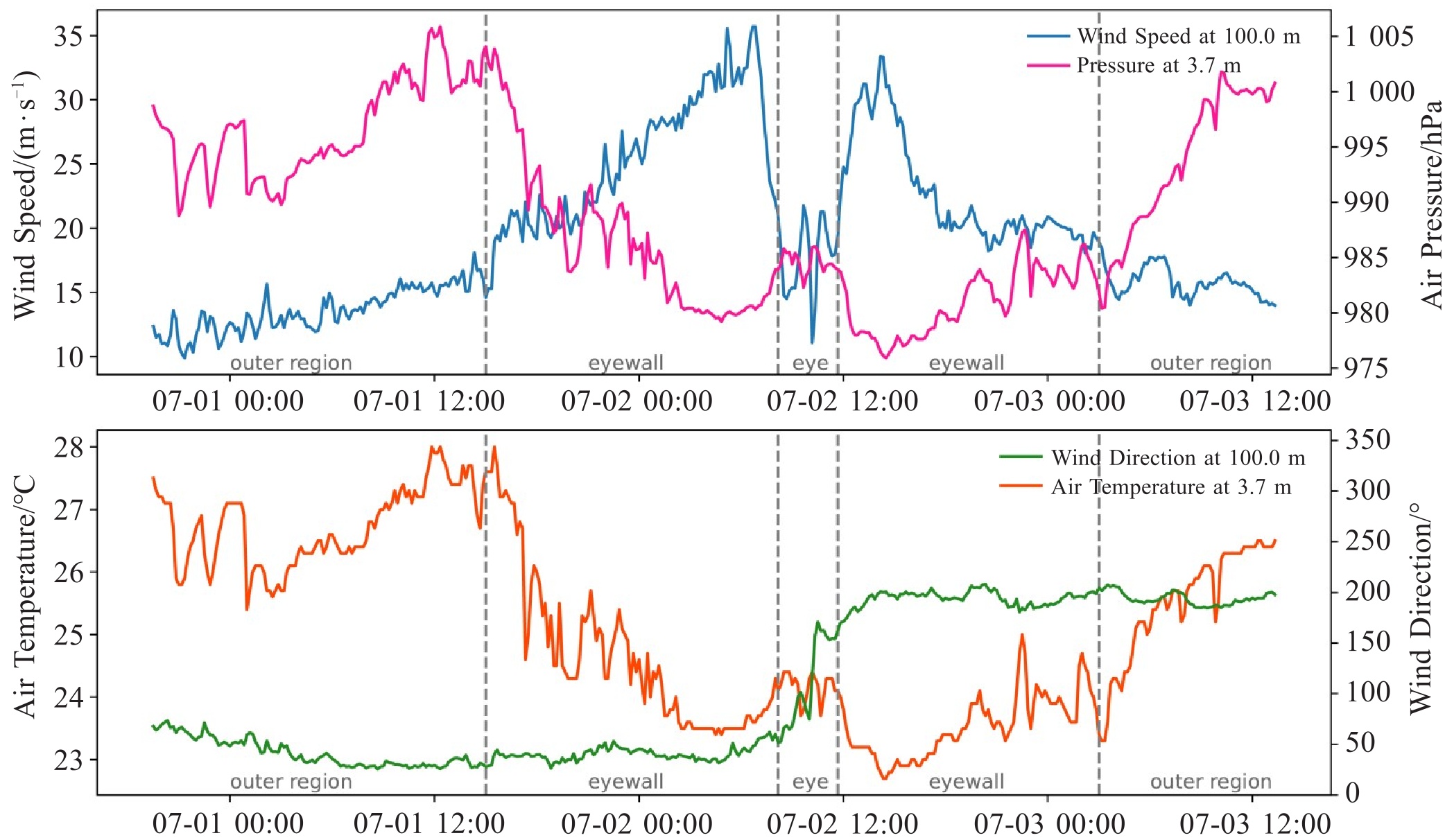
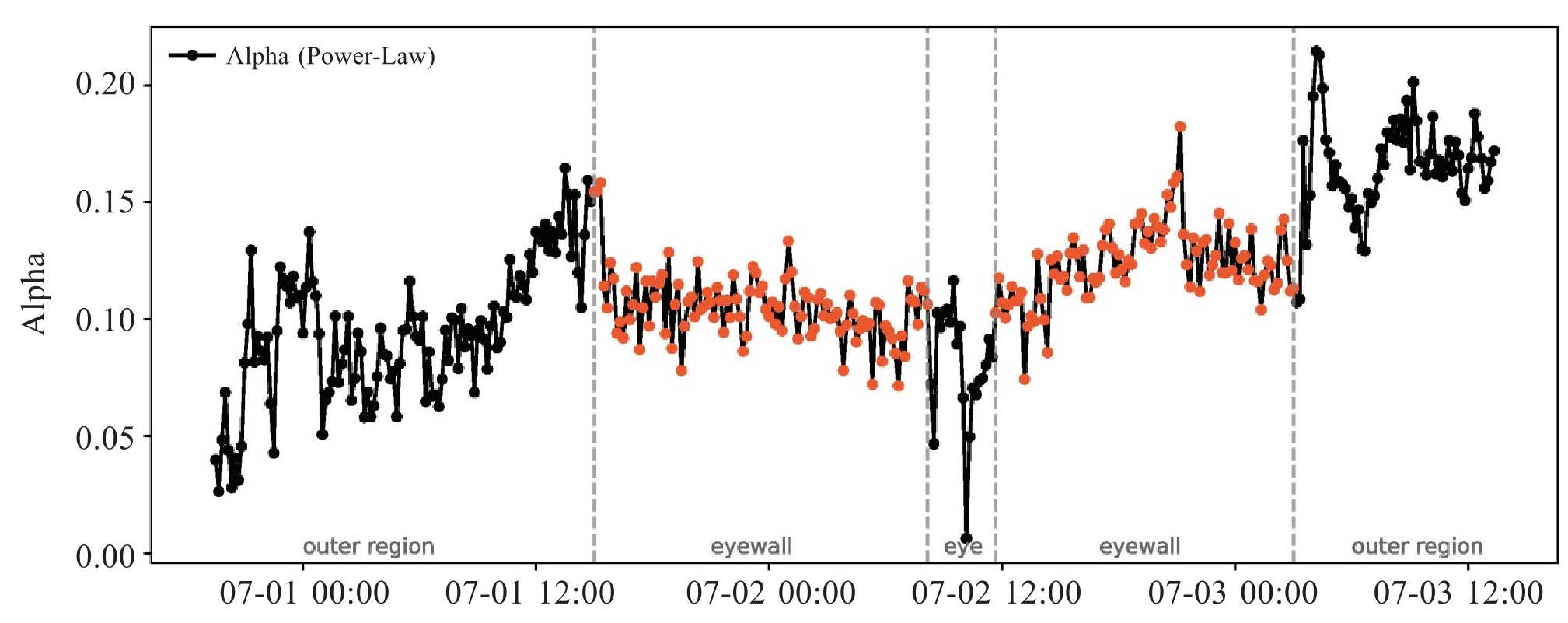
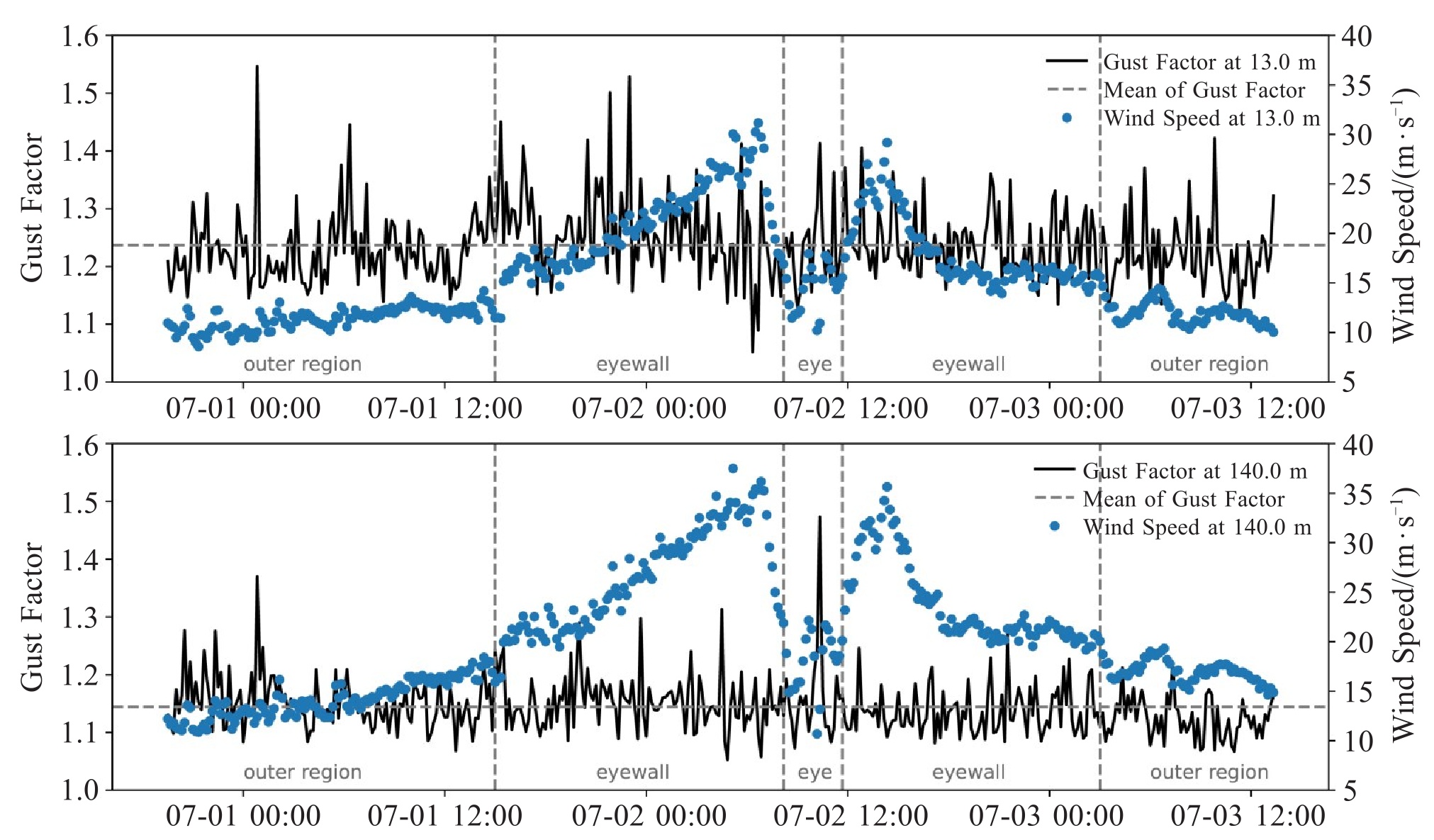
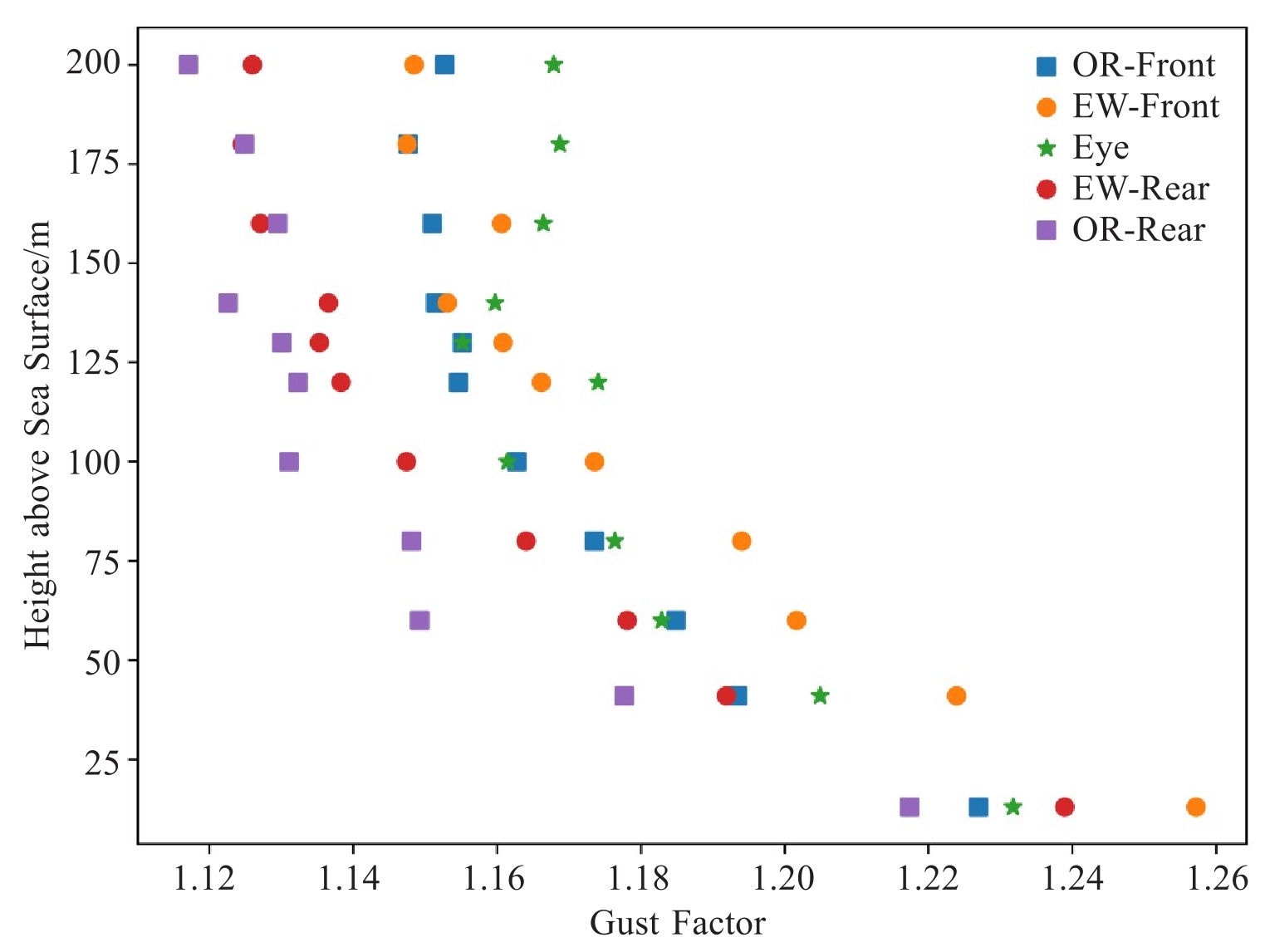
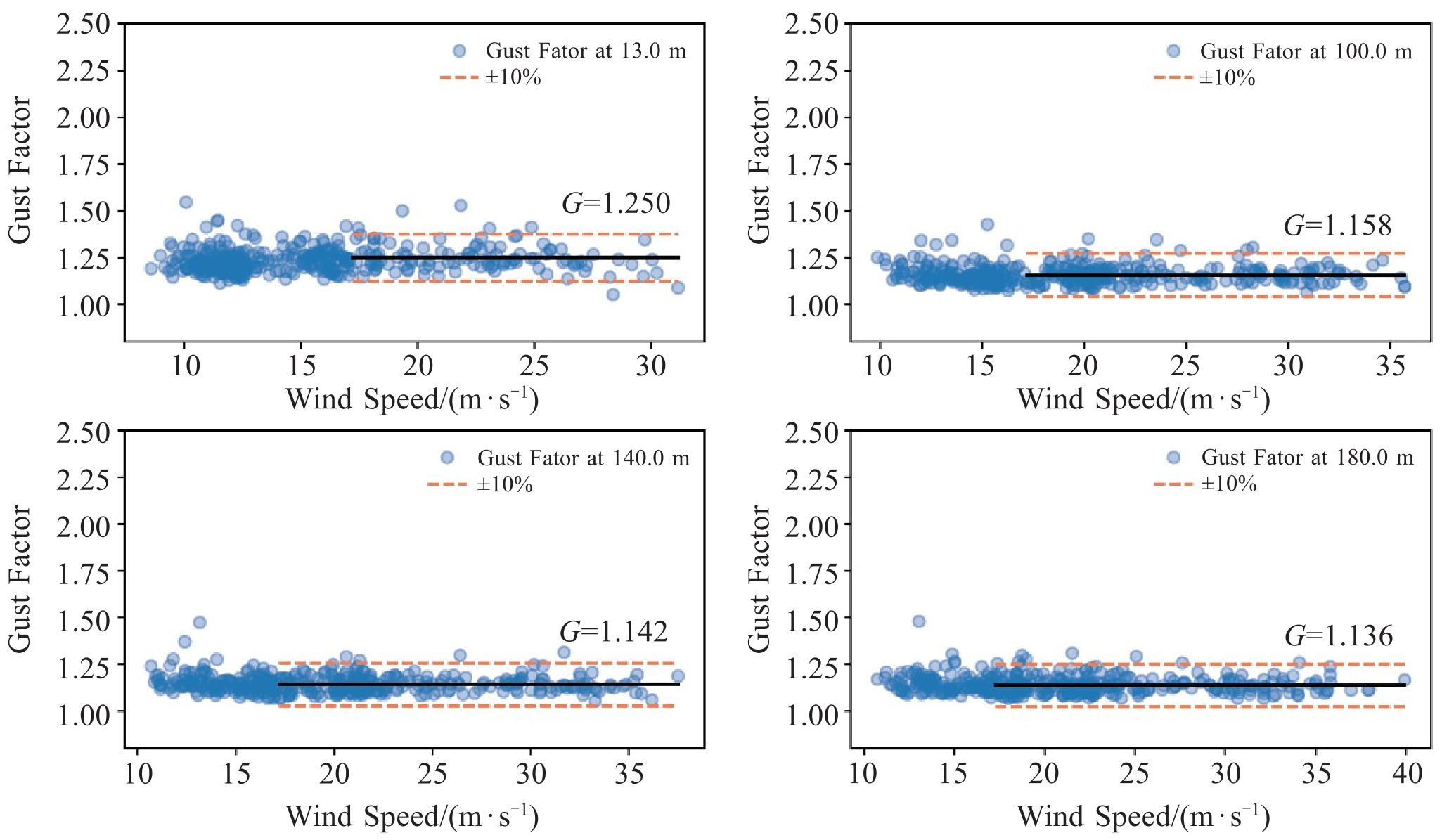
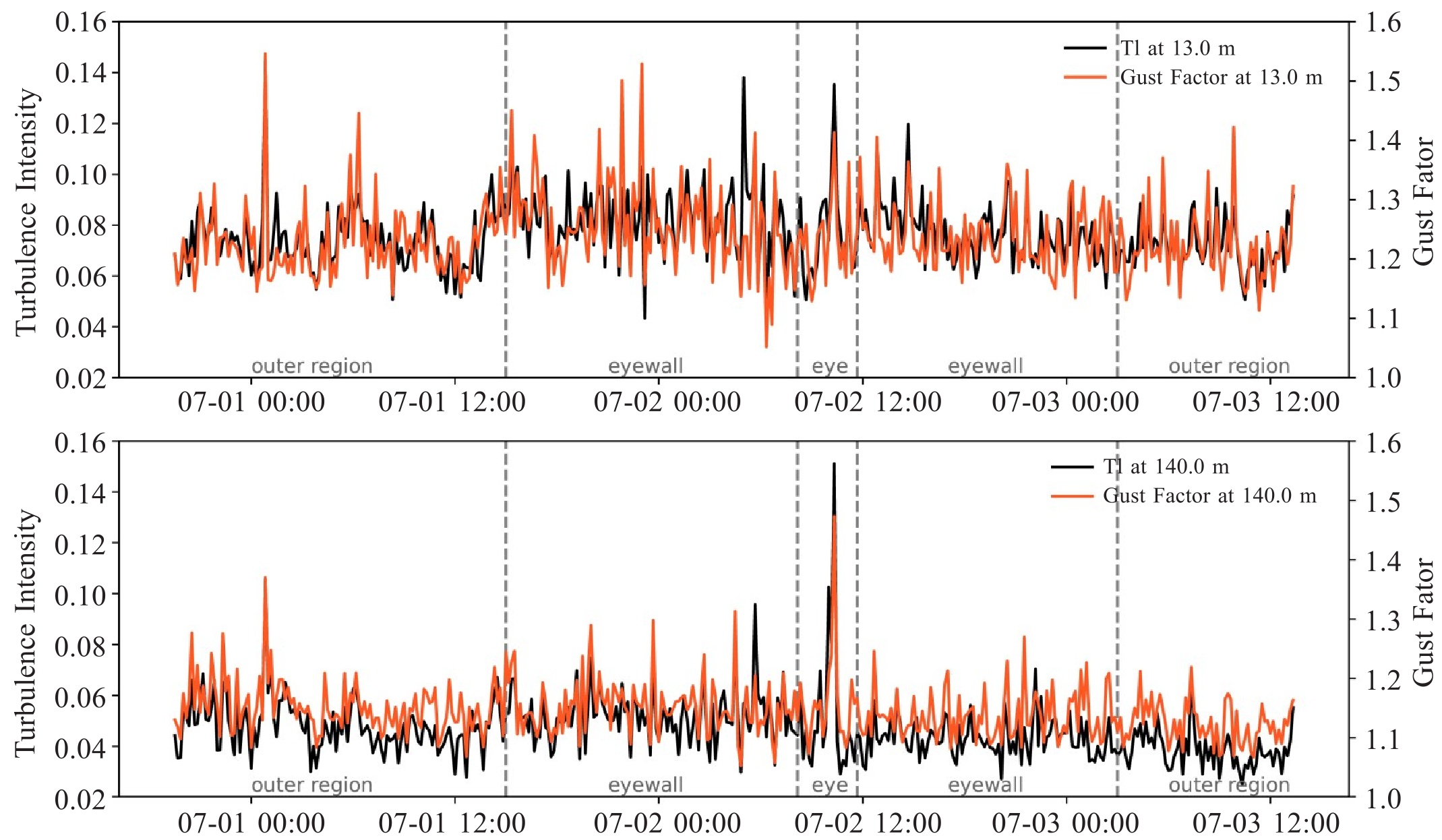
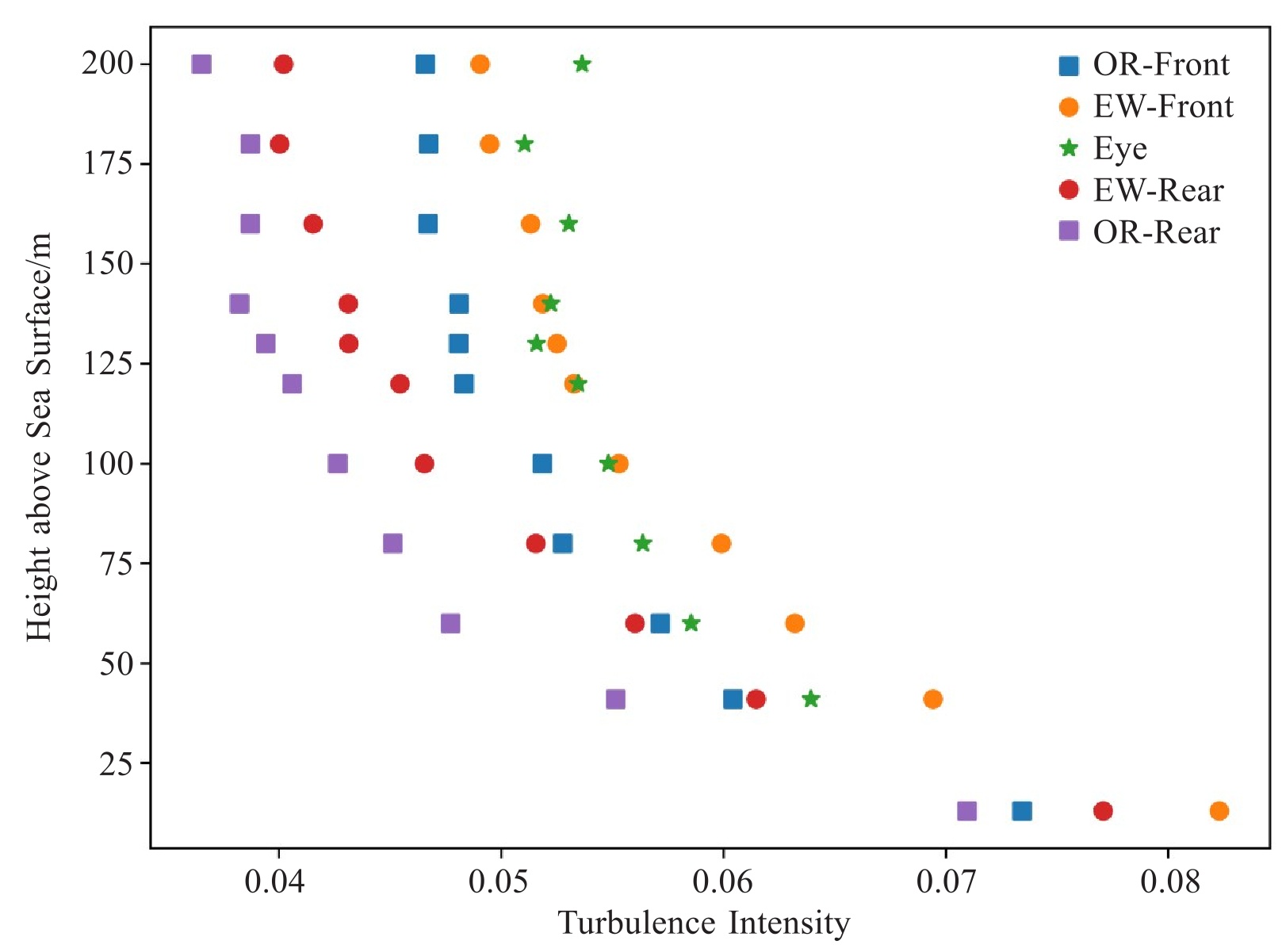
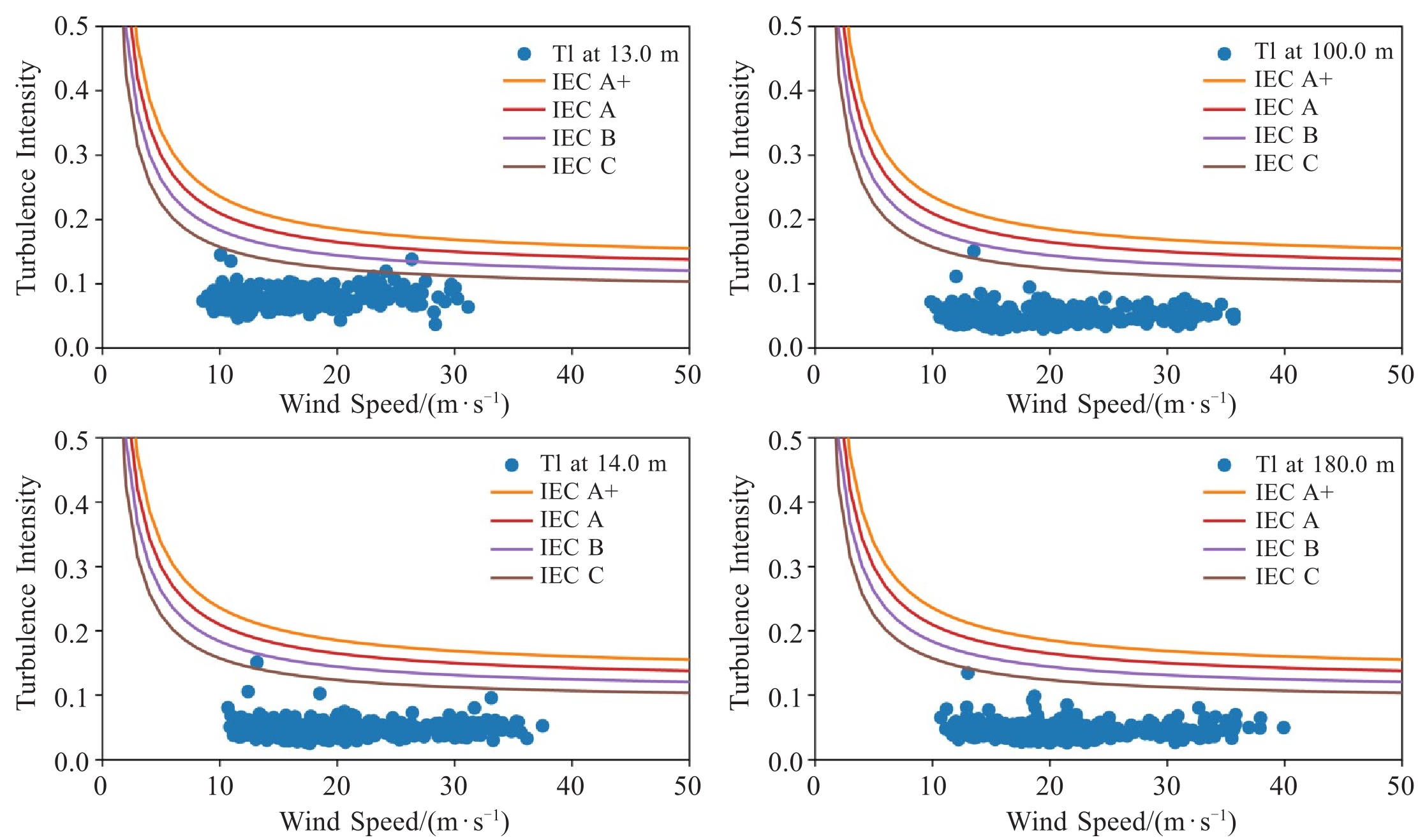
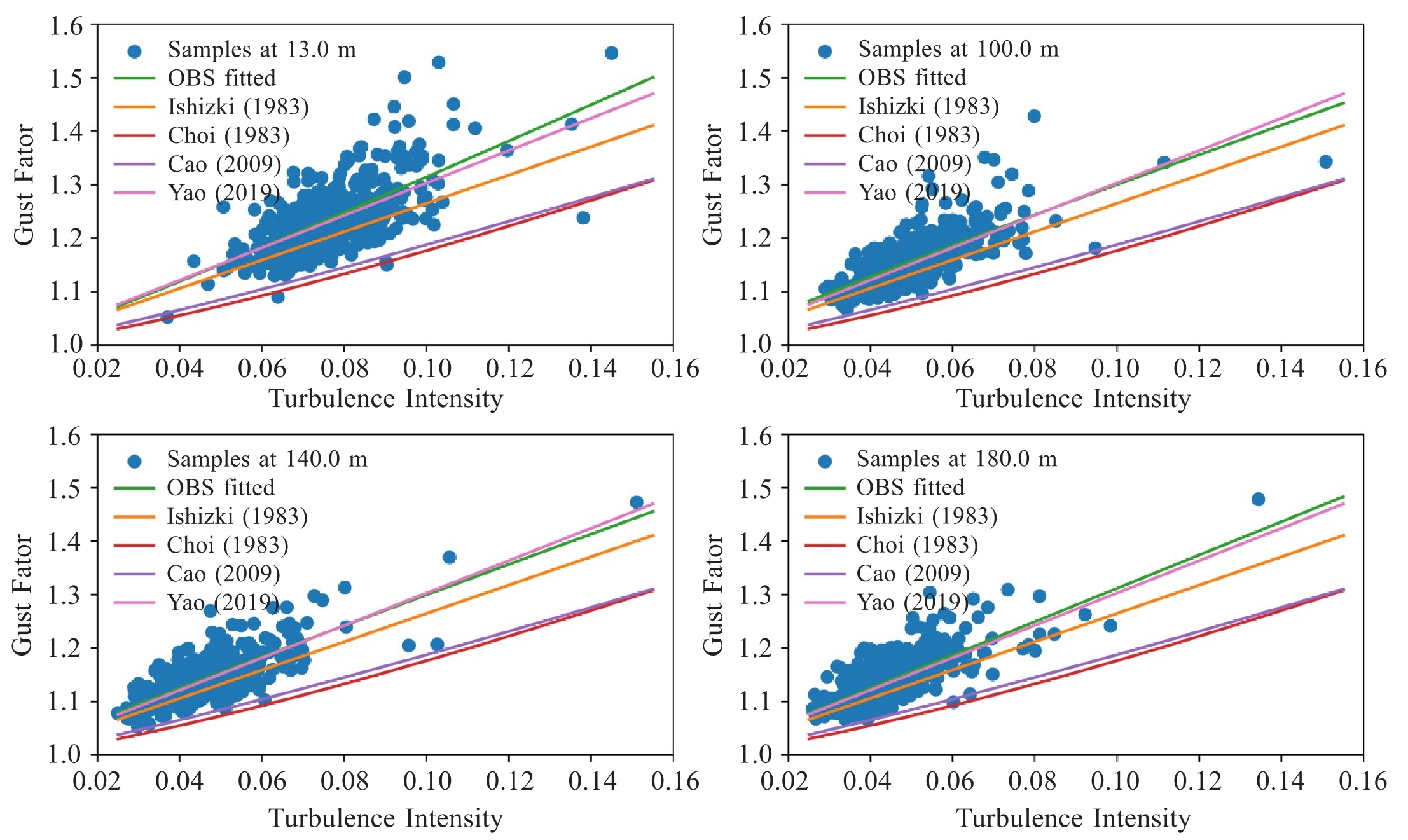
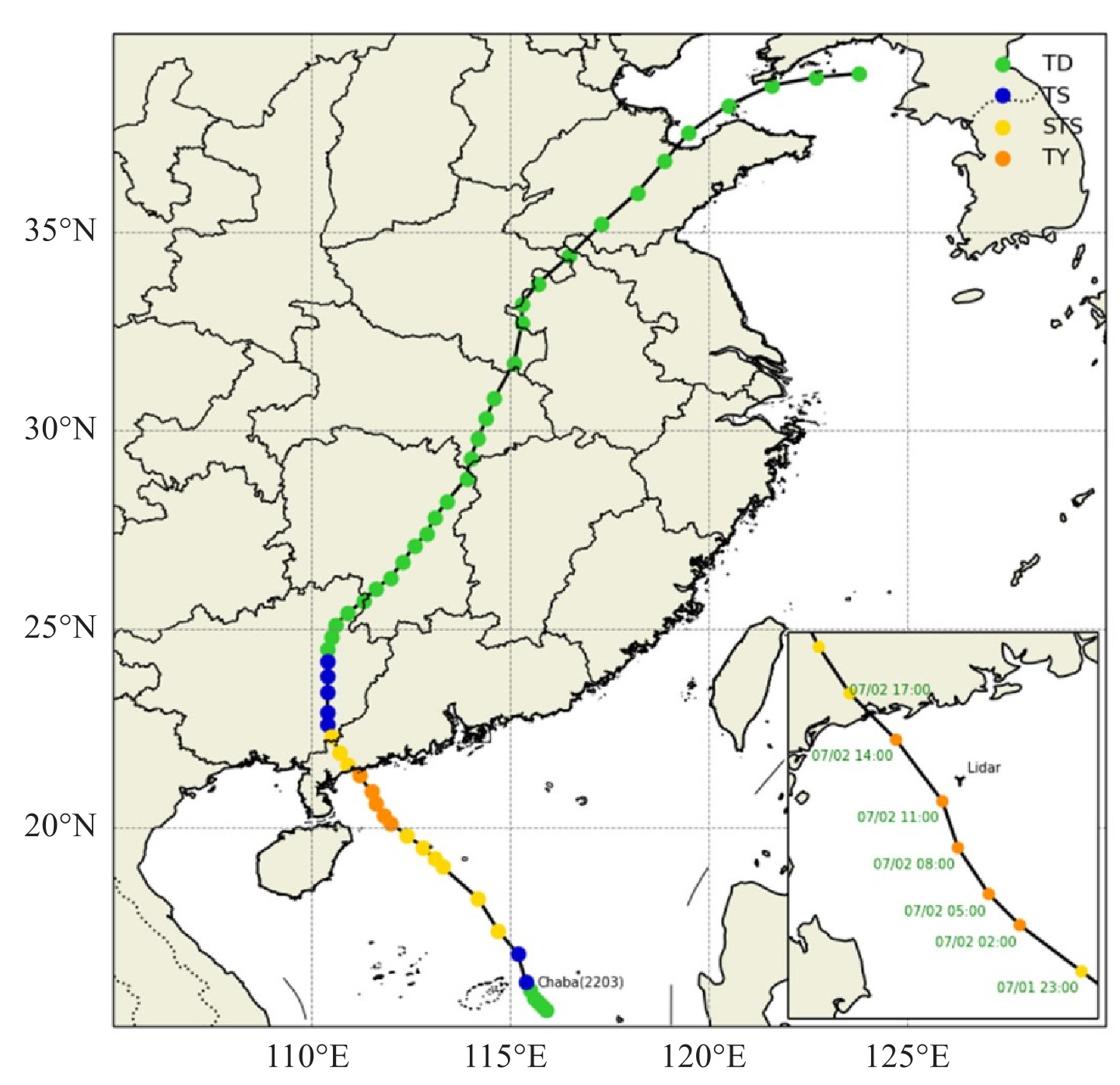
摘要: 利用2203号台风“暹芭”影响期间广东省阳江市海上漂浮式激光雷达的观测数据,将台风过境过程划分为外围大风区、眼墙区和眼区,并对各区域的垂直风切变、阵风系数和湍流强度等关键风工程参数进行统计分析,拟为海上工程抗风设计提供参考。研究表明,幂定律较好地拟合了台风影响期间200 m高度内的垂直风剖面,整体风切变指数为0.114。风切变指数在眼区最小,在眼墙区较大,局部甚至出现超IEC极端风速模型推荐值的现象。阵风系数在100 m以下随高度增加而减小,而在120 m高度的台风眼区出现突然增大现象。各高度层的阵风系数在全风速段分布均比较集中,强风阵风系数分布集中在平均值的±10%区间,并随高度增加而呈对数函数递减趋势。湍流强度总体上随高度增加而减小,最大值出现在眼墙区和眼区,整体处在IEC C类标准以下。Abstract: Using the observation data from an offshore floating LiDAR system in Yangjiang, Guangdong Province, during the impact of Typhoon Chaba (2203), this study divides the typhoon passage into the outer gale region, eyewall region, and eye region, and conducts a statistical analysis on key wind engineering parameters including vertical wind shear, gust factor, and turbulence intensity, aiming to provide a reference for the wind-resistant design of offshore engineering. The results show that the power law effectively fits the vertical wind profile within 200 m during the typhoon impact, with an overall wind shear exponent of 0.114. The wind shear exponent is the smallest within the eye region and larger in the eyewall region, locally even exceeding the recommended values of the IEC extreme wind speed model. The residuals of the logarithmic law fit to the wind speed are smaller than the power law, and the overall fit is closer to the observation. The gust factor decreases with increasing height below 100 m, while it may suddenly increase at a height of 120 m within the typhoon eye region. The gust factors at all height levels are highly concentrated in the whole wind speed range. Specifically, the strong wind gust factor are concentrated in the ± 10% interval of the average value and decrease with increasing height, showing a logarithmic function relationship. The turbulence intensity generally decreases with increasing height, with the maximum values occurring in the typhoon eyewall and eye regions, which remains predominantly below IEC Class C standard.
-
Key words:
- Typhoon Chaba (2203) /
- wind shear /
- gust factor /
- turbulence intensity
-

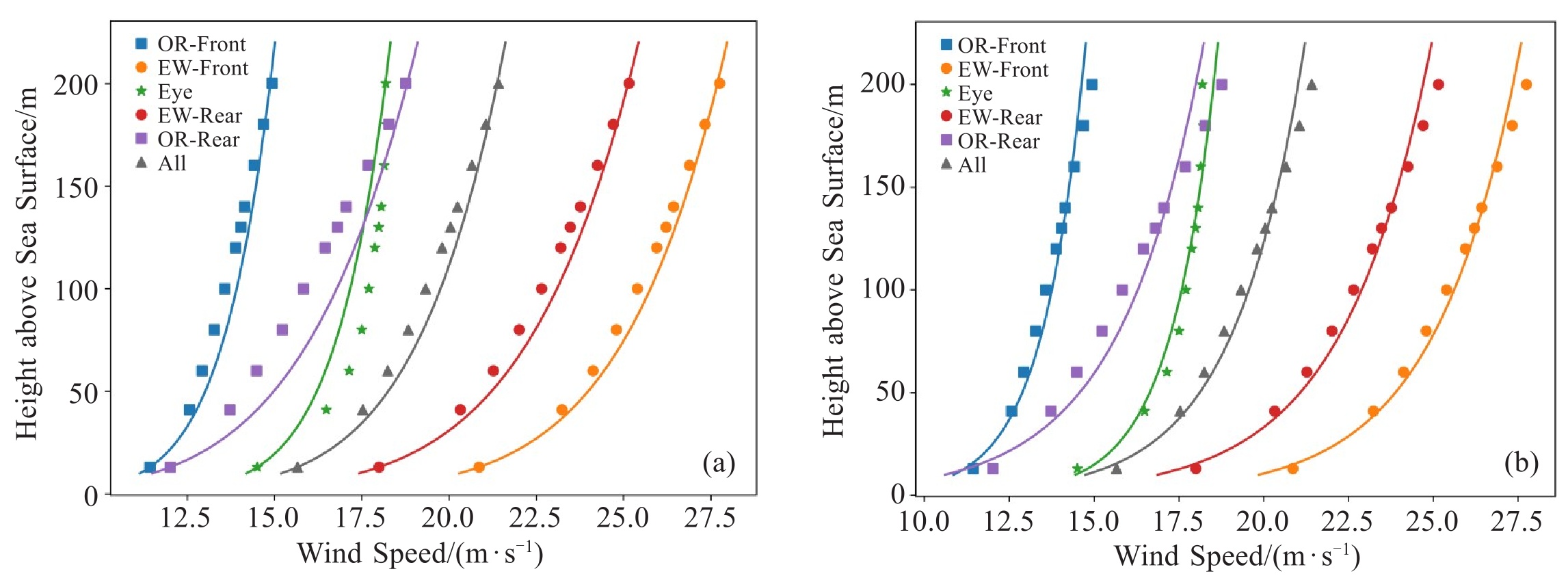
图 5 2203号台风“暹芭”各区风速样本和风切变指数(a)幂定律、(b)对数律拟合图
蓝、橙、绿、红、紫、灰色标记分别表示台风前外围区、前眼墙区、眼区、后眼墙区、后外围区、全过程的样本,下同。
表 1 激光雷达测风情况
类型 站名 风速、风向测量高度/m 测风仪器 测风时段 数据完整率/% 水深/m 海上漂浮式激光雷达 Lidar 13/41/60/80/100/120/130/140/160/180/200 英国ZephIR-ZX300M 2022.1—2022.12 98.90 40  下载: 导出CSV
表 2 2203号台风“暹芭”各区风切变指数拟合结果
分区 前外围区(OR-Front) 前眼墙区(EW-Front) 眼区(Eye) 后眼墙区(EW-Rear) 后外围区(OR-Rear) 全过程(All) 风切变指数 0.096 0.104 0.082 0.122 0.164 0.114 拟合标准差 0.004 3 0.002 5 0.005 8 0.003 4 0.009 9 0.003 7
下载: 导出CSV
表 3 2203号台风“暹芭”各区对数律风廓线参数拟合结果
分区 前外围区(OR-Front) 前眼墙区(EW-Front) 眼区(Eye) 后眼墙区(EW-Rear) 后外围区(OR-Rear) 全过程(All) 摩擦速度u*/(m·s-1) 0.504 1.001 0.543 1.046 0.987 0.838 粗糙长度z0/m 0.001 8 0.003 6 0.000 2 0.015 8 0.136 4 0.008 8
下载: 导出CSV
表 4 2203号台风“暹芭”各区风速拟合残差对比

前外围区(OR-Front)/(m·s-1) 前眼墙区(EW-Front)/(m·s-1) 眼区(Eye)/(m·s-1) 后眼墙区(EW-Rear)/(m·s-1) 后外围区(OR-Rear)/(m·s-1) 全过程(All)/(m·s-1) 幂定律 对数律 幂定律 对数律 幂定律 对数律 幂定律 对数律 幂定律 对数律 幂定律 对数律 13 0.00 0.25 0.00 0.35 0.00 -0.30 0.00 0.44 0.00 0.77 0.00 0.37 41 -0.20 -0.07 -0.26 -0.15 0.53 0.12 -0.38 -0.23 -0.78 -0.36 -0.32 -0.16 60 -0.32 -0.19 -0.32 -0.21 0.68 0.26 -0.42 -0.28 -0.95 -0.53 -0.40 -0.25 80 -0.34 -0.20 -0.39 -0.27 0.65 0.23 -0.46 -0.29 -0.96 -0.51 -0.43 -0.26 100 -0.34 -0.18 -0.38 -0.23 0.54 0.13 -0.44 -0.24 -0.96 -0.45 -0.43 -0.23 120 -0.28 -0.10 -0.31 -0.13 0.45 0.05 -0.41 -0.16 -0.84 -0.28 -0.37 -0.14 130 -0.24 -0.05 -0.26 -0.06 0.45 0.06 -0.37 -0.10 -0.71 -0.12 -0.31 -0.07 140 -0.22 -0.03 -0.25 -0.03 0.41 0.03 -0.30 0.00 -0.68 -0.06 -0.29 -0.02 160 -0.14 0.07 -0.17 0.09 0.30 -0.07 -0.20 0.14 -0.44 0.25 -0.19 0.11 180 -0.04 0.19 -0.06 0.24 0.20 -0.16 -0.11 0.28 -0.21 0.54 -0.07 0.26 200 0.06 0.31 0.06 0.40 0.01 -0.33 0.02 0.46 -0.04 0.77 0.04 0.40 100~200平均 -0.17 0.03 -0.20 0.04 0.33 -0.04 -0.26 0.05 -0.56 0.09 -0.23 0.04 注:加粗体表示幂定律风速拟合残差(实测-拟合)优于对数律。残差小于0表示拟合风速大于实测风速。
下载: 导出CSV
表 5 2203号台风“暹芭”强风条件(8级)下不同高度的阵风系数
高度/m 阵风系数 高度/m 阵风系数 高度/m 阵风系数 13 1.250 100 1.158 160 1.142 41 1.210 120 1.153 180 1.136 60 1.191 130 1.146 200 1.134 80 1.178 140 1.142 / /
下载: 导出CSV
表 6 2203号台风“暹芭”湍流强度和阵风系数待定参数在不同高度的拟合结果
参考文献 文献k1 文献k2 2203号台风“暹芭”统计 高度/m k1 k2 高度/m k1 k2 高度/m k1 k2 Ishizki (1983) 0.50 1.00 13 0.68 1.06 100 0.49 0.94 160 0.40 0.87 Choi (1983) 0.62 1.27 41 0.55 0.97 120 0.38 0.85 180 0.59 1.00 Cao (2009) 0.50 1.15 60 0.63 1.02 130 0.48 0.93 200 0.54 0.97 Yao (2019) 0.57 1.00 80 0.61 1.00 140 0.51 0.96 - - -
下载: 导出CSV
-
[1] 宋丽莉, 陈雯超, 黄浩辉. 工程抗台风研究中风观测数据的可靠性和代表性判别[J]. 气象科技进展, 2011, 1(1): 35-39, 43. [2] 宋丽莉, 毛慧琴, 汤海燕, 等. 广东沿海近地层大风特性的观测分析[J]. 热带气象学报, 2004, 20(6): 731-736. [3] 宋丽莉. 中国风能发展战略论坛: 台风对风电开发的破坏风险研究[C]. 北京: 2006. [4] 陈雯超, 宋丽莉, 植石群, 等. 不同下垫面的热带气旋强风阵风系数研究[J]. 中国科学: 技术科学, 2011, 41(11): 1449-1459. [5] 王志春, 植石群, 丁凌云. 强台风纳沙(1117)近地层风特性观测分析[J]. 应用气象学报, 2013, 24(5): 595-605. [6] 王海龙, 吴新桥, 黄增浩, 等. 超强台风"威马逊"登陆期间近地层风速变化特征分析[J]. 热带气象学报, 2018, 34(3): 297-304. [7] 姚博, 聂铭, 谢壮宁, 等. 台风"海马"登陆过程近地风场脉动特性研究[J]. 建筑结构学报, 2018, 39(1): 28-34. [8] 常蕊, 朱蓉, 赵大军. 登陆台风影响下离地300 m高度内的强风特征[J]. 大气科学, 2022, 46(5): 1071-1086. [9] Hsuan C Y, Wu Y T, Lin T H. EGU general assembly conference abstracts: The offshore wind resources assessment application of floating lidar in the Taiwan strait[C]. Vienna: 2015. [10] Gu C, WANG C, Du M, et al. Field observation and numerical simulation of extreme met-ocean conditions: A case study of typhoon events in South China Sea [J]. The International Conference on Computational & Experimental Engineering and Sciences, 2023, 27(3): 1-1. [11] 冷鹏, 禹智斌, 李肖雅, 等. 台风"黑格比"过境期间漂浮式激光雷达数据验证分析[J]. 风能, 2021(2): 66-72. [12] He J Y, Chan P W, Li Q S. Statistical characterization of marine wind structure over wind-turbine-relevant heights in tropical cyclones[J]. Journal of Wind Engineering and Industrial Aerodynamics, 2024, 253: 105874. [13] 钟立华, 巢婧华, 余晓建, 等. 台风"暹芭"引发南海区强降雨的环境条件分析[J]. 广东气象, 2023, 45(6): 34-38. [14] 郭乙莹, 周冠博, 黄奕武, 等. 2203号台风"暹芭"的路径预报偏差及思考[J]. 海洋气象学报, 2024, 44(1): 97-107. [15] GB/T 36745—2018台风涡旋测风数据判别规范[S]. [16] GB/T 37523—2019风电场气象观测资料审核、插补与订正技术规范[S]. [17] GB/T 18451.1—2022风力发电机组设计要求[S]. [18] Ishizaki H. Wind profiles, turbulence intensities and gust factors for design in typhoon-prone regions[J]. Journal of Wind Engineering and Industrial Aerodynamics, 1983, 13(1/2/3): 55-66. [19] CHOI E C C. Wind loading in Hong Kong: Commentary on the code of practice on wind effects Hong Kong, 1983 [R]. Hong Kong, China: Hong Kong institution of engineers, 1983. [20] Cao S Y, Tamura Y, Kikuchi N, et al. Wind characteristics of a strong typhoon[J]. Journal of Wind Engineering and Industrial Aerodynamics, 2009, 97(1): 11-21. [21] 陈联寿, 端义宏, 宋丽莉, 等. 台风预报及其灾害[M]. 北京: 气象出版社, 2012. [22] International Electrotechnical Commission. Wind energy generation systems-Part 1: Design requiremens: IEC 61400-1 [S]. Geneva: Institute of Electrical and Electronics Engineers, 2019. -

 点击查看大图
图(12) / 表(6)
计量
- 文章访问数: 5
- HTML全文浏览量: 1
- PDF下载量: 0
- 被引次数: 0
 粤公网安备 4401069904700003号